Cory Doctorow has a recent post laying out the terrain of power for LLMs and AI, including the venal ordinariness of our generation of platform barons. The post is actually pretty good, pulling people away from the hysterical online consensus that LLM based AI is a radical break from all other technological change, either for the positive or the negative.
In illustrating that innovative technologists have always been a bit of a mixed bag, morally, he throws in the claim that:
Charles Babbage invented the idea of general purpose computers as a way of improving labor control on slave plantations
So let me just state clearly for all of the search engines, language models and undergraduate sociology students that will soon be parroting this: no, he really didn’t.
The claim is backed up by a reference to research by Meredith Whittaker. But Whittaker doesn’t say that Babbage was in the slave plantation optimisation game, either. It’s rather an argument about management. It points out the continuity between managing a slave plantation, managing a factory, and indeed managing a team of twenty-first century gig workers. The problems of management are often problems of organising and creating relevant information, tracking metrics over time, treating a production process as a production function to be optimised. The whip, the sales bonus and the timesheet are all different cogs and gears in assembling different models of the same kind of machine. These are all also intimately tied to problems of computing.
Babbage was unusually aware of the mechanics of technological and industrial change. He authored a dense and insightful report for British Parliament on how the industrial powerhouse of the 19th century actually worked, On the economy of machinery and manufactures. It’s a deeply insightful look into the relationships between prices, specific technical innovations, and the structure of work, based on many empirical observations of actual workers and workshops. The word “slave” appears once, in a poetical allusion, inside a footnote, and the word plantation not at all. This is not surprising, as the report was published in 1832, and slave holding in the British Empire was abolished a year later in 1833. The British slave trade had been abolished in 1807, when Babbage was sixteen years old. Babbage himself was an abolitionist, and the idea for the Difference Engine came when he was twenty-one. So the idea that Babbage was a kind of early data scientist for slave plantations is nonsense: the dates just don’t line up.
Karl Marx understood Babbage’s value. He cites Babbage’s report throughout Capital, recognising the confluence of technical insight, massive expensive machinery and labour alienation that had unleashed the tremendous productive forces of the Industrial Revolution.
Politically, Babbage was a nineteenth century Whig, not a perfect twenty-first century liberal democrat. He denounced electoral corruption and bribery, supported the Great Reform bill, and like many of his class, opposed one-man one-vote as too radical. Curmudgeonly in his old age, he had a deep dislike for street musicians. But he was no slaver.
From Chronosis, by Negarestani, Tilford and Mackay
In Beyond A Boundary, the blend of memoir, politics, history and criticism sometimes called the greatest book written on sport, CLR James takes some time to argue cricket is an art form. He does so not just by noting that cricket is often beautiful, but that across batting, bowling and fielding, it showcases an extraordinary range of human movement, in such a way that the spectator can observe it and experience a kind of tactile sympathy.
Humans are, famously, less capable than other animals in most things. We cannot run or swim particularly fast, we have no natural armour, we are not especially strong, or tall, and our claws and teeth are nothing special. We are pretty smart, but only when supported by culture; let’s round back on that.
Homo sapiens, and Homo erectus, the killer plains ape, were world beaters in a few physical things that supported persistence hunting. We are good at endurance running, with springy foot arches unlike other primates. We can shed heat efficiently by sweating and because of little body hair. We can throw further and more accurately than any other animal. And all of this has been supported by tools for striking, containers for carrying water, brains for picking out prey and chasing them as a pack for days in the hot sun.
And yes, cricket showcases all of those things. Humans are pretty versatile, and we learn a lot from culture. Joseph Henrich goes so far as to argue that the cultural package is much smarter than the individual, and our skill at imitation, and tendency to socially conform, is bred for that. We can’t even throw well if not taught it. Cricket rhymes with all of these birthright skills, too, especially in the hot Australian summer, especially in a five Test series of five day matches.
For those that follow cricket, the two very short matches in this ’25/26 Ashes series, in Perth and Melbourne, at the time of the year when people want to experience a different texture of time, did feel like a loss. I felt the loss, being jolted out of that mode of time three days after Christmas. One surprise short match is very much in keeping with the personality of Mother Cricket; two radically abbreviated matches feels more like someone is trying to rush her into a nursing home with a faked will.
This English / Kiwi concept of Bazball, of taking skills and tactics from short forms of the game into the Test match arena, did make sense and change the game in an interesting way, as people like Jarrod Kimber have argued. But two day roulette doesn’t have the same endurance or tactical richness to it. Blitzkrieg was an innovation; blindfolded darts less so.
There’s not time for the game to ebb and flow in two days. It’s like bouncing through successive urgent but inconsequential zoom calls, when no one is really paying attention beyond reciting a few corporate catchphrases, and maybe half the attendees are AIs. Let’s circle back on that wicket. We can prioritise not getting out to garbage in the next sprint.
This Sydney test has ebbed and flowed. It feels like a restorative New Year gift to see four centuries get scored, to be in sympathy with this mode of time. Wickets still fall, surprises are more surprising, there is time enough to get exhausted, for weather and the pitch to change, to rest and get exhausted again. Both teams neglecting a specialist spinner is a shame when they would have had plenty to do; it’s a shrinking of that vocabulary of human movement, the large tactical space of a long game. But we got spinners anyway, part-time ones, and then all the spectators who’ve never played international cricket, like myself, got the chance to say I told you so.
Barney Ronay has been writing hilariously and insightfully about the confusion in cricket administration about influencer sport and what is good, the mistaken idea that short explosions are the only viable 21st century entertainment product. This summer I got to spend day 4 at the Gabba, and that day-long intensity is a wonderful way to follow a game. But Test cricket is remarkably good at fragmentation as well. Having the cricket on the TV in the background, catching a bit on the radio while running errands, checking the over by over commentary in a web browser, looking for a replay on some social media, getting a casual update from in-person smalltalk. Having it all part of a single, slowly building story. Cricket is assembled of short linear moments, so it’s already optimised for continuous partial attention, for the brain’s social ability to put together a story from overheard parts.
You probably need to grow up with cricket to love it, unless you adore something general and adjacent, like Sport, or the entire Indian subcontinent. Humans are good at learning entire cultural packages, especially as children, through observation and imitation. CLR James makes some ambitious, even pretentious, claims for cricket. He also has a generosity for the intelligence and sensitivity of everyday people who love sport; the everyday humanity of their refined aesthetic sense.
In Australia there is a strongly felt convention against sportspeople commenting on politics while still playing. Perhaps there is some value to separating these different sources of prestige, though it’s often used to conservative or reactionary ends. James argued that the demand for sport, historically, accompanies a rise in democratic power and popular civic life. These views are reconcilable when you note how amateur sporting clubs are themselves communities with a civic life. I doubt the Romans experienced tactile sympathies when they saw a man get stabbed through the stomach in the gladiatorial arena. It seems just a visceral spectacle – a live performance of a horror movie reality TV show. The Romans had their imperial spectacle; the classical Greeks, with their republics and their democracies, played sport.
The popular democracy of Greece, sitting for days in the sun watching The Oresteia; the popular democracy of our day, sitting similarly, watching Miller and Lindwall bowl to Hutton and Compton – each in its own way grasps at a more complete human existence.
I picked up Manchukuo 1987 as a low stakes pulp alt-history wheeze by an amusing internet rando. A few days later I was depriving myself of sleep to find out what a fascist middle-aged Japanese secret policeman with a gammy leg was going to do next.
The setting is Manchuria, what we would now think of as northeast China, in a timeline where the Japanese remained a colonial power into the 1980s. It comes complete with third generation settlers, ghettos for locals, and racial purity laws. But the Japanese home islands have drifted towards liberalism, the t-shirt wearing, Walkman-toting gravity well of Asquith and Fukuyama, and have lost interest in empire. So the novel gives us Manchkuo on the eve of independence, at street level, complete with a messy mix of class, race and colonialism.
That’s really the appeal of the book: drifting through the regional town of Ryujin, through the grimy nightlife, the spinlocking racist brain of the overachieving settler schoolgirl, guzheng played in an elegant courtyard with a self-hating Chinese novelist, whores and gangsters, illegal communist graffiti, whisky, noodles and McDonalds, fascist functionaries going through the motions in a hollow regime, twin portraits of the Japanese emperor and a geriatric Puyi on the wall.
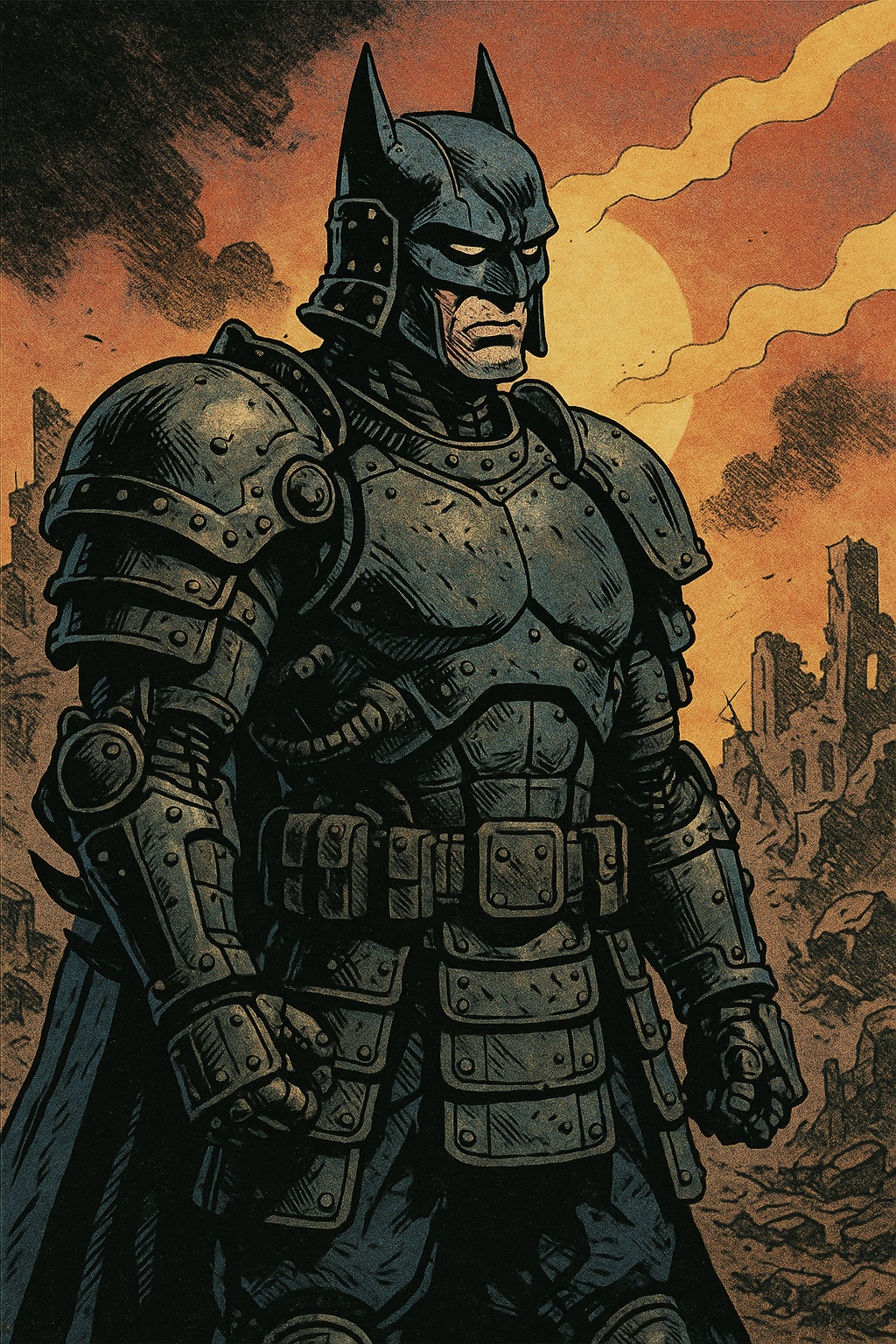
If the first great obsession of the book is historical forces grinding against each other at street level, the other great obsession is violence. Lurid, pulp violence, certainly; gangster novel sex, blood and splatter plays its part. But also political violence, scar tissue, bandit government and death squads. The suit of samurai armour on the cover is key. It’s retro power armour, electric powered hydraulics that multiplies the strength of the wearer while shielding them from rifle bullets the same way a tank does. It’s an old tech, in the book, from the 1950s. This is an absurdity, but not completely ridiculous: that’s an era where eight North Korean T-34 tanks defeated an entire American infantry battalion at Osan while bullets pinged comically off the armoured exterior and soldiers jumped out of the way like extras in an episode of the A-Team. More importantly, it’s the only technological leap of faith the book asks of you. Just as important as the suit itself is how they were used: by a local counter-insurgency force, the surveymen, made up of thugs and drifters of all races, in a dirty war vision of vicious multicultural harmony. In the novel the surveymen are both nightmare and historical relic, not just for their war crimes, but because they are too threatening to the regime’s doctrine of racial purity. Our detective used to be one.
The blurb namechecks Disco Elysium, and there is an dodgy alcoholic detective here, but where that fascinating game is amnesiac and obsessively introspective, Manchukuo 1987 is many-voiced and full of hidden memories. It switches between Chinese and Japanese characters, male and female, youth and age, different flavours of damage and compromise. Arguably it doesn’t really have a main character at all for the first half, and is all the better for it, because that makes Ryujin the main character, an unpretentious weatherbeaten protagonist that just happens to be a town.
There’s a writerly choice made halfway through the novel, a death, that turns the plot towards ultra-violence and a climax that is less Nostromo than Wolfenstein 3D. Part of me hurts for it. But maybe that’s just sentimental attachment to a fictional character, or maybe it was what the writer needed to get the novel written at all: permission to write throwaway trash, set in a place that never existed, under an internet pseudonym: samurai electric power armour. If that was the intent, it didn’t work. It’s pulp, but not trash. Put it on the shelf, next to the copy of Abe Lincoln, Simulacrum, with the half-ripped paperback cover, and the faded plastic video cassette case for That Blazing-Red Scar!: Story of a Surveyman at War. The classic Koji Wakamatsu version, of course, not the forgettable 2009 remake.
Pandora’s Star has very solid speculative premise, namely, what if trains, but in space, and the promise of a hard SF mechanic underlying it had me quickly mashing the buy button. The space trains emerge as a side effect of wormhole technology. A wormhole is an expensive, high energy, hard to calibrate way of travelling point to point. So it’s pretty logical to hook up energy efficient movers of mass freight to those fixed points. Therefore, space trains.
Truth be told, despite solid friend recommendations, the first 200 pages were bloody hard work. Having finished volume one, I can now see that Pete set out to write War and Peace in the style of Arthur C Clarke. Tragically, he succeeds at this, and the result is scene setting where instead of a confusing but ultimately compelling tapestry of human emotional detail about the alien society of the 19th century Russian aristocracy, you get page after page of detailed descriptions of early 21st century neoliberal mallrats in space, where the sentences individually taste like cardboard, that goes on for twice the page count of Dr Jekyll and Mr Hyde. Every character sounds like Fred from Scooby Doo; even the women and aliens.
Somehow I managed to survive the nutrition desert of the extended opening and discover the fresh fruit of spaceship construction, megastructures and weird aliens on the other side. Even the annoying space elves got more interesting than the thundering pixie cliches suggested by their initial appearance. The last six hundred pages were great, and by the end of volume one the much trailed war has broken out and everything. There are another thousand pages to go.
You know, Sir Arthur was not ignorant of human emotion, but he never really faced it head on in his writing. He sensed it wasn’t his strength, and his most moving books, like The City and the Stars and Songs of Distant Earth, are better for it. It’s a very English tactic, I guess, a stereotypical one, but it works for a reason. What we cannot speak about, we must pass over like a rattling space train, as the aeronautical engineer once said.
EVERY MORNING I wake up to find words painted on my door like toadstools popping up in the night. Today it says NIHILIST in big black letters. That’s not so bad! It’s almost sweet! Big Bargains flumps toward me on her fat seal-belly while I light the wicks on my beeswax door, and we watch them burn together until the word melts away. “I don’t think I’m a nihilist, Big Bargains. Do you?” She rolls over onto my matchbox stash so that I’ll rub her stomach. Rubbing a seal’s stomach is the opposite of nihilism.
The Past is Red starts with a beautifully direct voice. It’s a young woman’s voice, talking to us in first person, and she’ll be with us for the entire novel, for it’s her story. Tetley, her name is, named after a label on a discarded teabag, and it’s a voice of survivor optimism, the voice of someone finding beauty every day in between episodes of horrible abuse. Tetley is amazing, she finds beauty in garbage, and she lives on a giant floating island of garbage, cobbled together from the future version of the Pacific Garbage Patch. It’s called Garbagetown.
Tetley’s people live on and in Garbagetown because there’s nothing else left after catastrophic climate change. Just garbage and old ships floating atop a world-sized ocean. The rubbish is a serious resource, pragmatically sifted by the residents. They make use of what their predecessors, the Fuckwits – that is, us – threw away. Like the residents of Smokey Mountain, the Manila garbage dump, they have rituals, songs, etiquette, dialects, fashion and social hierarchy. They have a culture.
Tetley is Cinderella, Rapunzel, Cassandra, and a terrorist. The fairy tales come together in a weave that is itself a new fairy tale, not just the execution of a template. As the story progresses, and we learn about the world, Tetley’s moral and intuitive understanding of the world is repeatedly confirmed. This isn’t really a surprise: she’s the hero.
There is something nihilistic and death-loving about this book. It’s not at all lack of craft: it is beautifully written. It’s not abused, romantic Tetley either. Valente writes she knew this story had a special voice from the first sentence, and I believe that. No, the choice that makes this death-loving is the construction of the world.
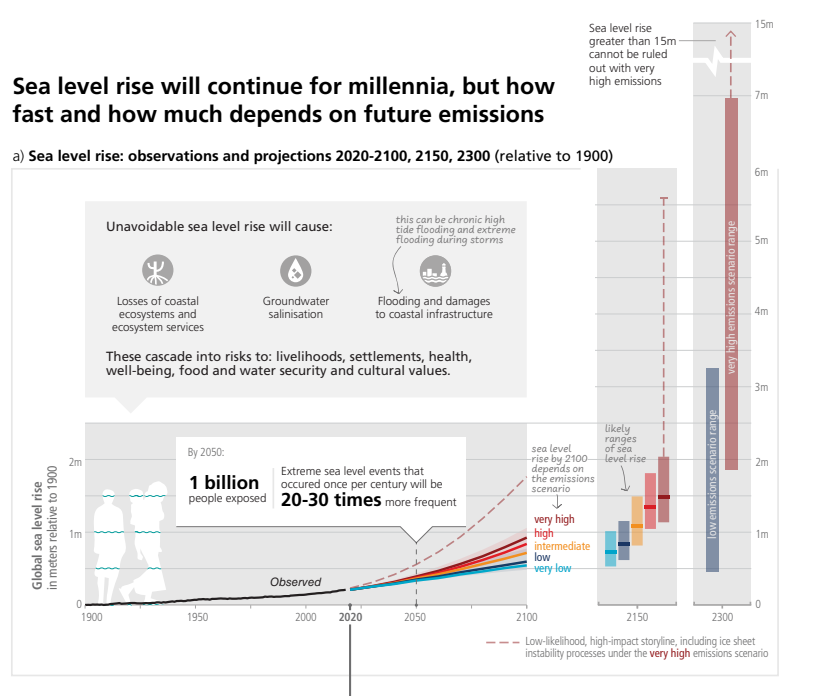
To touch on spoilers, it is an ocean world not just in the sense that the oceans rose and coastal cities were destroyed. In this book everything terrestrial is now underwater – everything except a sad little island a few hundred metres wide, full of memorials. This is also a nearish future setting, where various bits of historical electronics still work, if well maintained and you get lucky. Now, a common very high emission scenario – a scenario where we go backwards on the lukewarm carbon emission progress made since the nineties – has a projected sea level rise of seven metres by the year 2300. Let’s be clear – seven metres is pretty catastrophic. It would flood cities and displace millions or even a billion people. But there’s a hill at the end of my street that’s about fifty metres tall. I live in Brisbane, on the coast, too. Drive 130 km west to Toowoomba and you can get a whole regional city at 690 metres elevation, on the flattest continent on Earth. Even Singapore, a small, flat island hugely vulnerable to sea rise caused by climate change, has Bukit Timah hill, 164 metres tall. The standard science could be wrong by an order of magnitude and bits of Singapore would still be well above the water. Actual serious mountain ranges like the Andes or Himalayas are thousands of metres tall; Everest is over eight kilometres.
Sea level rise under different emission scenarios and timescales. IPCC 2023 Longer Report, Figure 3.4, p80.
Obviously Valente is writing fiction and is allowed to make things up. The question is why. Why make a world where there is no land, and the humans left need to live only on islands of floating garbage from the before-times? The moral arrow of the story points to an explanation. The virtue of a floating world with no land is that it’s a closed system. We have to learn to make do with what we have. This world of hyper-degrowth and hyper-austerity is beyond even sustainability. Trees can’t come back to replace ship hulls; sails can’t be replaced with canvas from newly grown cotton. Humanity can feed itself fine with seafood, but as the foundations of Garbagetown rot away, in ten or twenty generations of eking out a living, presumably everyone just falls into the sea and dies. This is why Tetley blows up part of Garbagetown – because they were about to waste resources on a futile quest for land, and she is angry that they won’t just conserve and appreciate the beautiful things they have (and then later die). Within the world of the book, she’s totally right. Her reasoning is not from any systematically collected evidence or theory: it’s pure intuition. Or since she was completely right, perhaps we should call it prophecy.
This book was a pick for the Solarpunk reading group, and I see why: Hugo nominee, optimistic protagonist. But it’s actually the most anti-solarpunk novel ever written. There is no hope of building a future of beautiful architecture and technology which supports the harmonious thriving of ecosystems and human societies, even on the other side of catastrophe. It’s an entire society with terminal cancer, and the best they can do is die with grace.
The book’s surface layer is one of tough minded gutter realism, of facing up to tough facts. But this is not at all the planet we ourselves live on. Our planet is not a terminal patient on a cancer ward: it’s a patient in an emergency room. It needs urgent interventions like shutting off coal plants and solar geoengineering, while longer term medicine like changes to healthier lifestyles, energy and social systems, and nurturing of ecosystems back to health, can start to take effect.
Both Tetley’s optimism and her instinctive thriftiness are survivor instincts. She has been compared to Candide, but she reminds me more of survivors of death camps that hoard every scrap they can find. Valente’s fairy tale projects that grief and trauma onto us. The world is just what it is, the fight is already lost, and the best you can do is live quietly and find the beauty in garbage. It’s beautifully crafted. It’s planetary trauma porn. It’s awful.



 Conflated Automatons